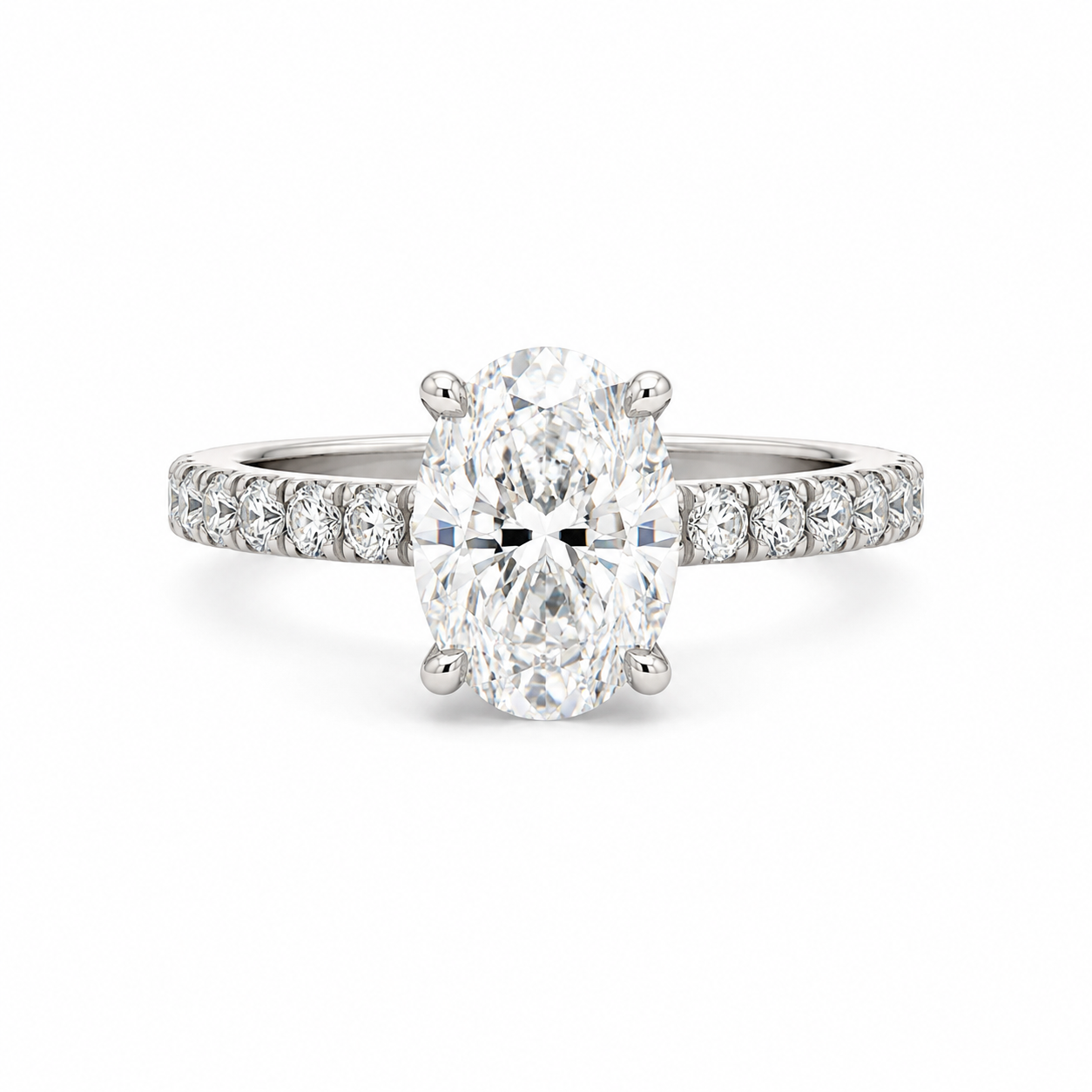
NATURAL DIAMONDS
Each natural diamond carries a story that began deep within the Earth.
Natural diamonds were formed deep beneath the Earth’s surface under extraordinary heat and pressure over immense periods of time. Every diamond therefore carries its own combination of natural characteristics, proportions and visual personality.
For diamonds graded on the traditional GIA D-to-Z colour scale, the progression begins with colourless diamonds and gradually moves toward stones showing increasingly noticeable yellow or brown colour.
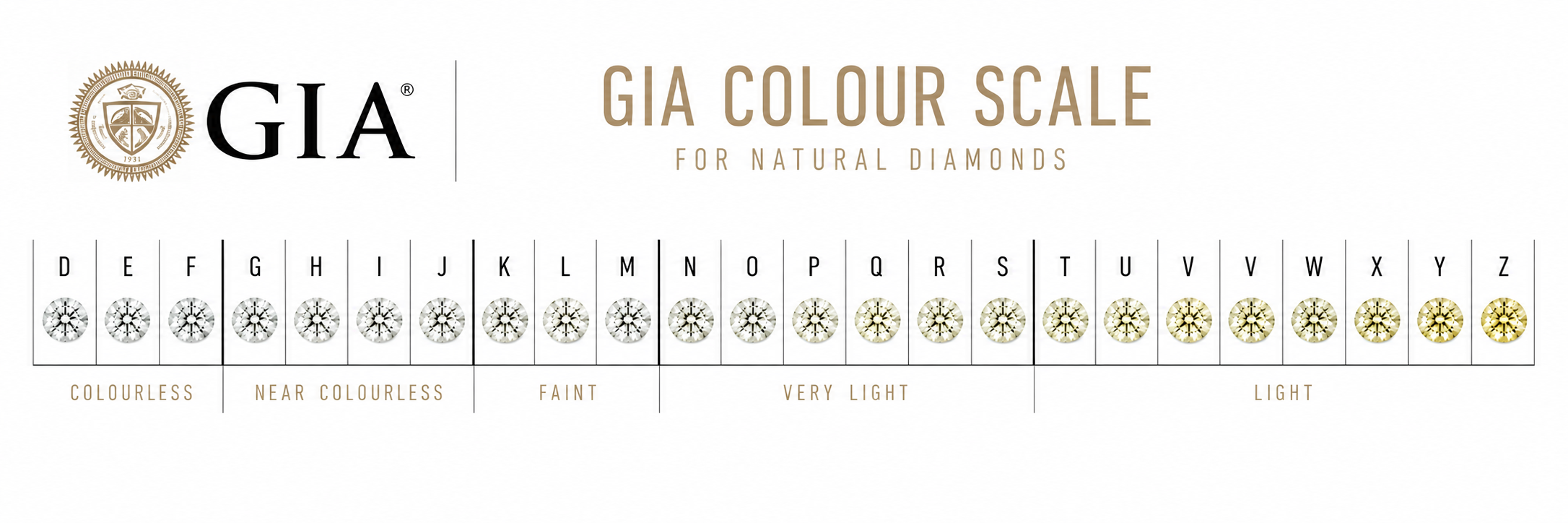
D represents the highest colourless grade on the GIA D-to-Z scale. As the scale progresses toward Z, increasingly noticeable yellow or brown colour may be present. The colours shown here are a visual guide only and are not a substitute for laboratory grading.
DESERT DIAMONDS
A warmer expression of the natural diamond.
Desert Diamonds celebrate natural diamonds with warm, earthy colour. Rather than pursuing the traditional colourless appearance associated with classic white diamonds, these stones are selected for shades ranging from soft champagne and golden tones through to deeper honey, cognac and brown.
Their appeal lies in their individuality. Subtle variations in tone and saturation give every stone its own character, making these natural differences an important part of their beauty.
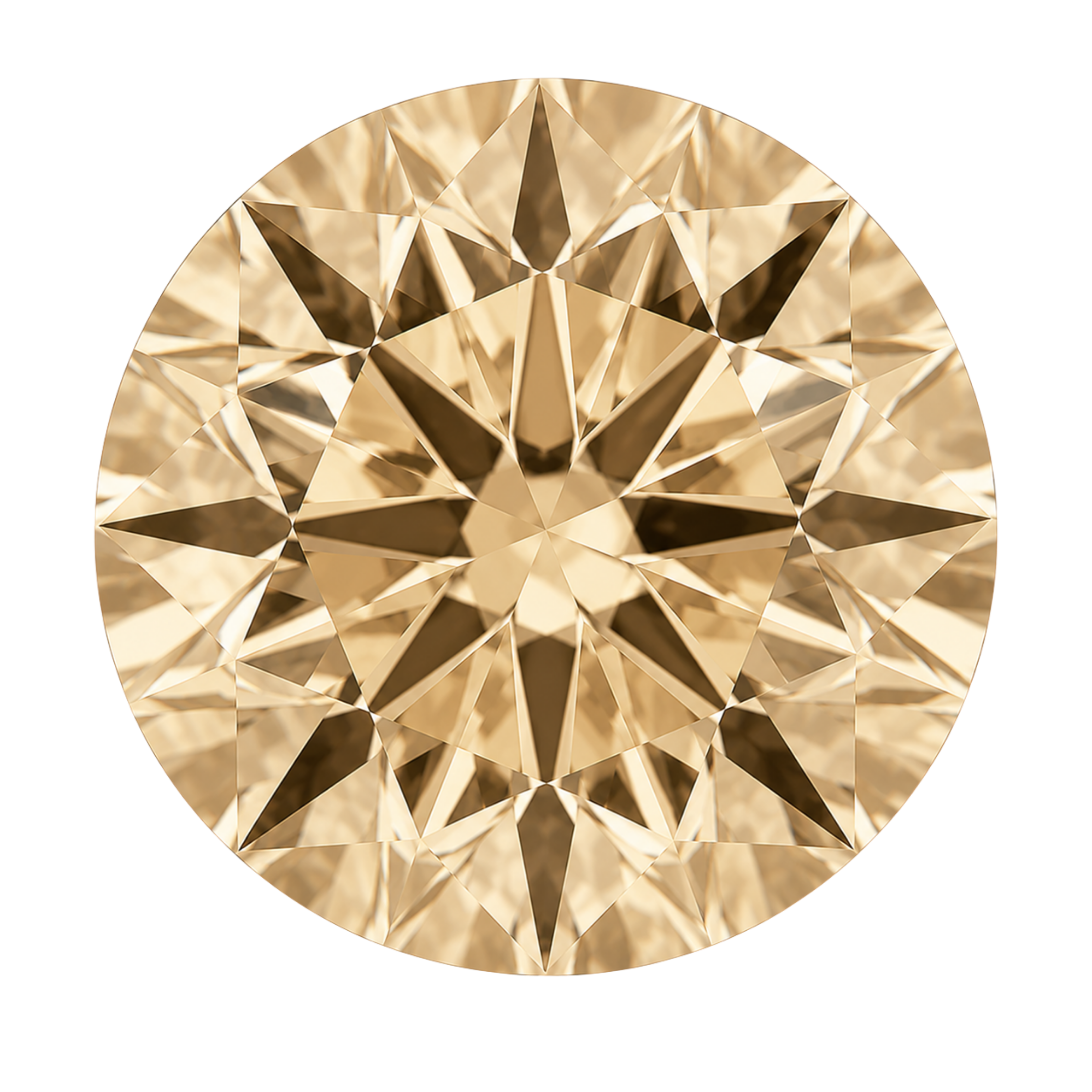

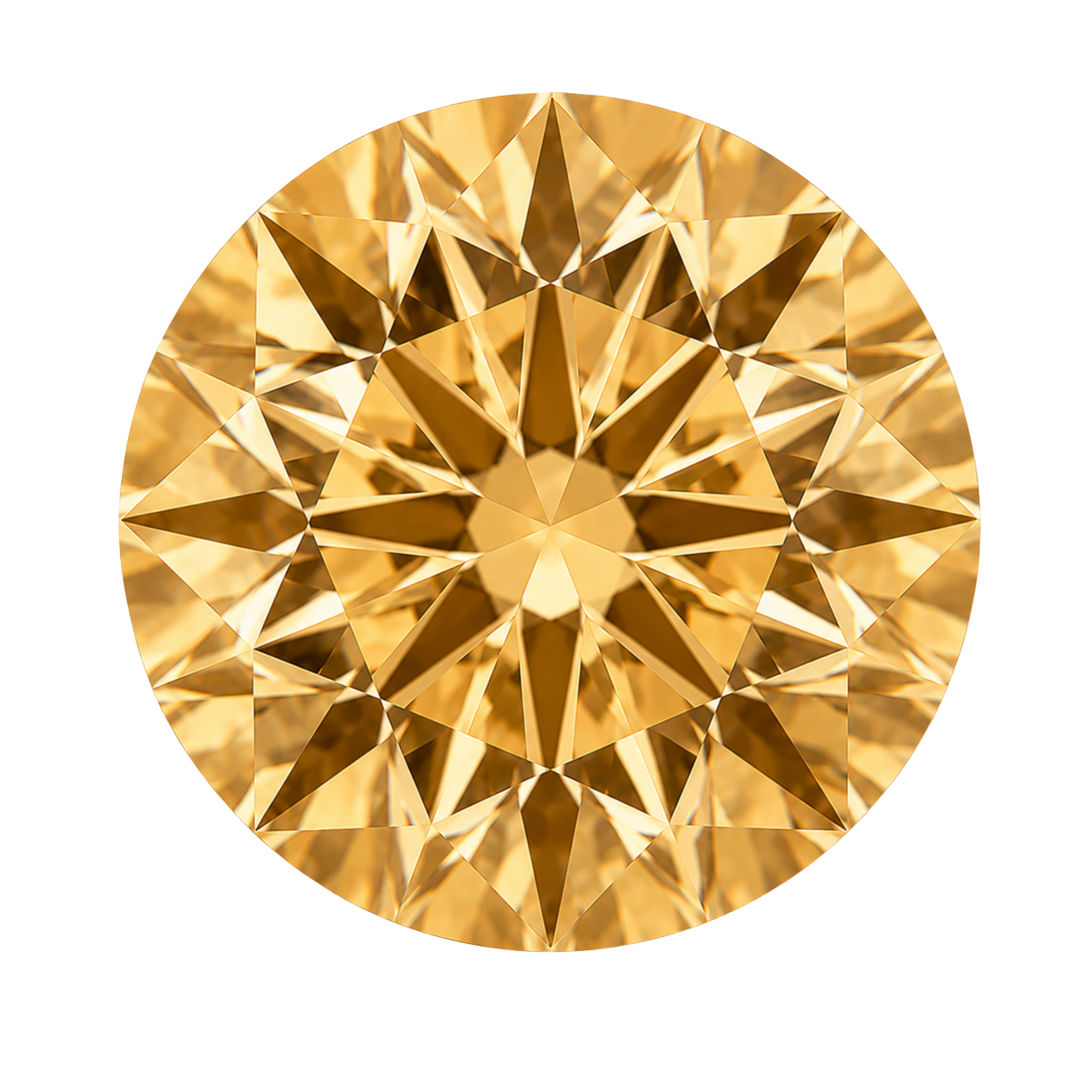
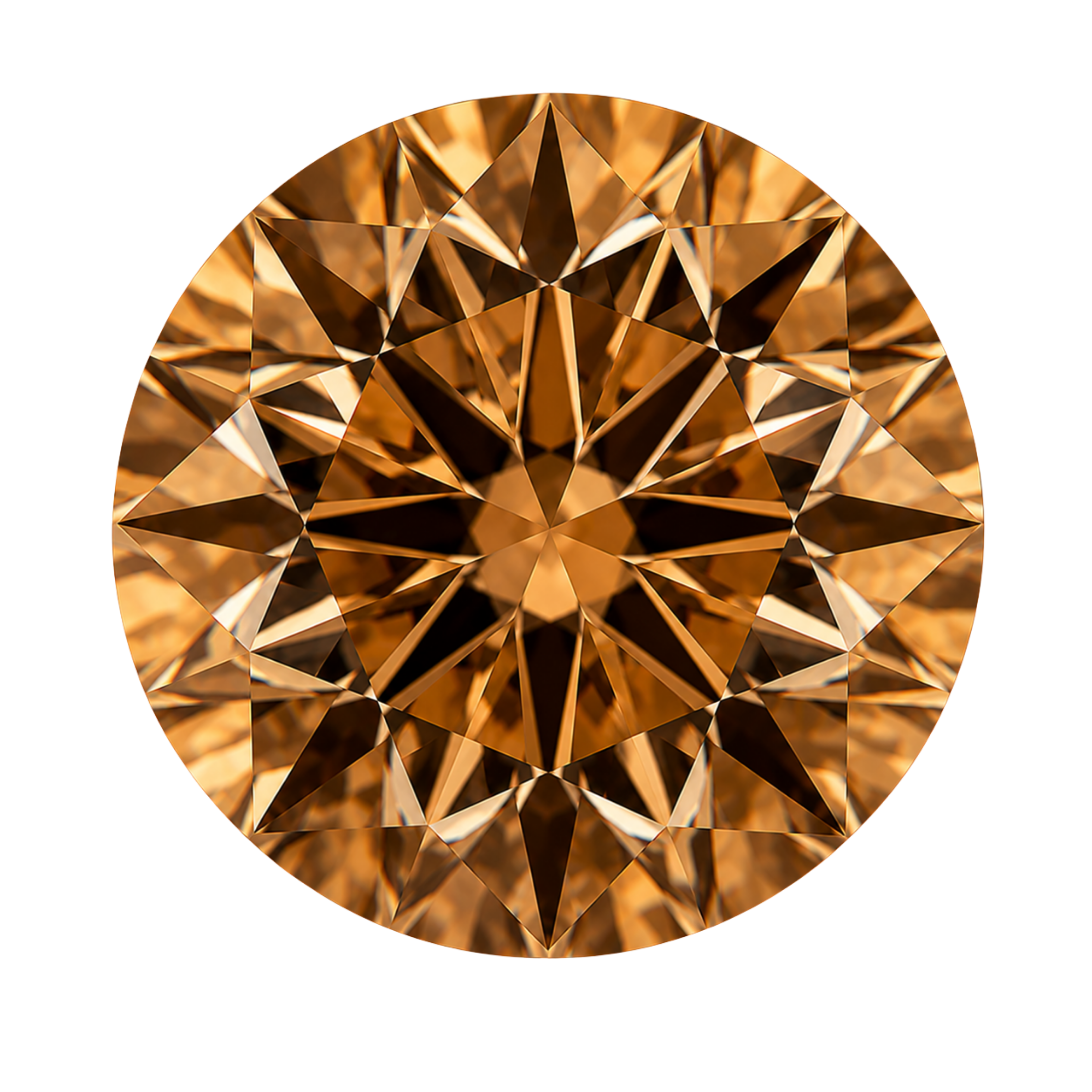
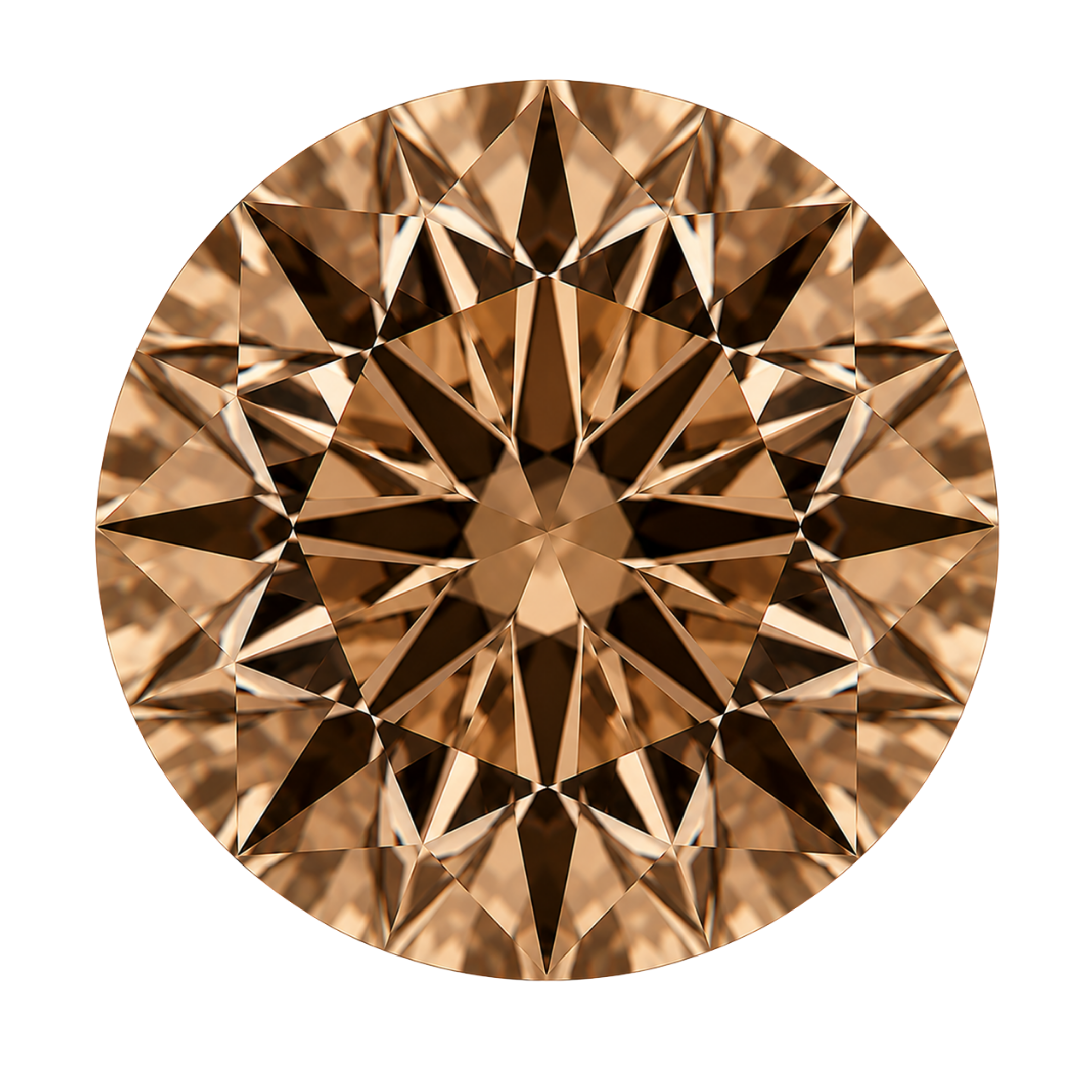
Natural colour varies from stone to stone, so these shades are intended as a visual guide rather than fixed colour grades.
COLOURED DIAMONDS
Natural diamonds can occur in an extraordinary spectrum of colour.
Beyond the traditional D-to-Z colour scale, nature can produce diamonds displaying distinct hues including blue, green, yellow, brown, orange, red, pink and purple, together with rarer or more unusual variations.
In coloured diamonds, hue, tone and saturation become defining characteristics. Even diamonds belonging to the same colour family can differ significantly in appearance, giving each stone its own individual character.
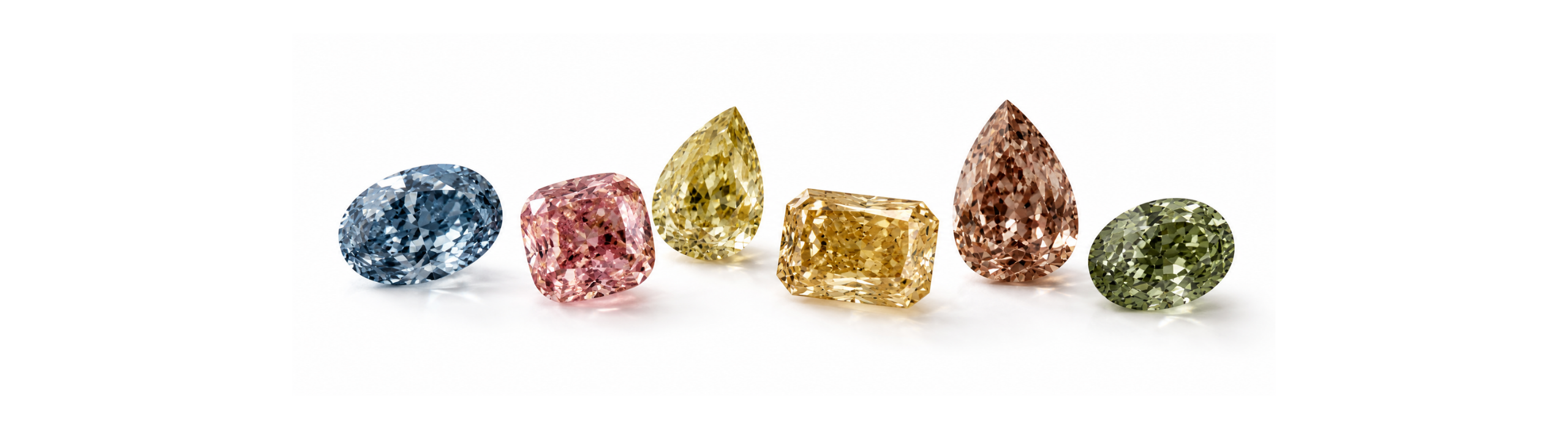
The examples above represent broad colour families that can occur naturally in diamonds. Individual stones vary in hue, tone and saturation, and laboratory grading is required to determine the colour characteristics of a specific diamond.
HOW TO READ A GIA REPORT
A grading report provides an independent record of a diamond’s identifying and grading characteristics.
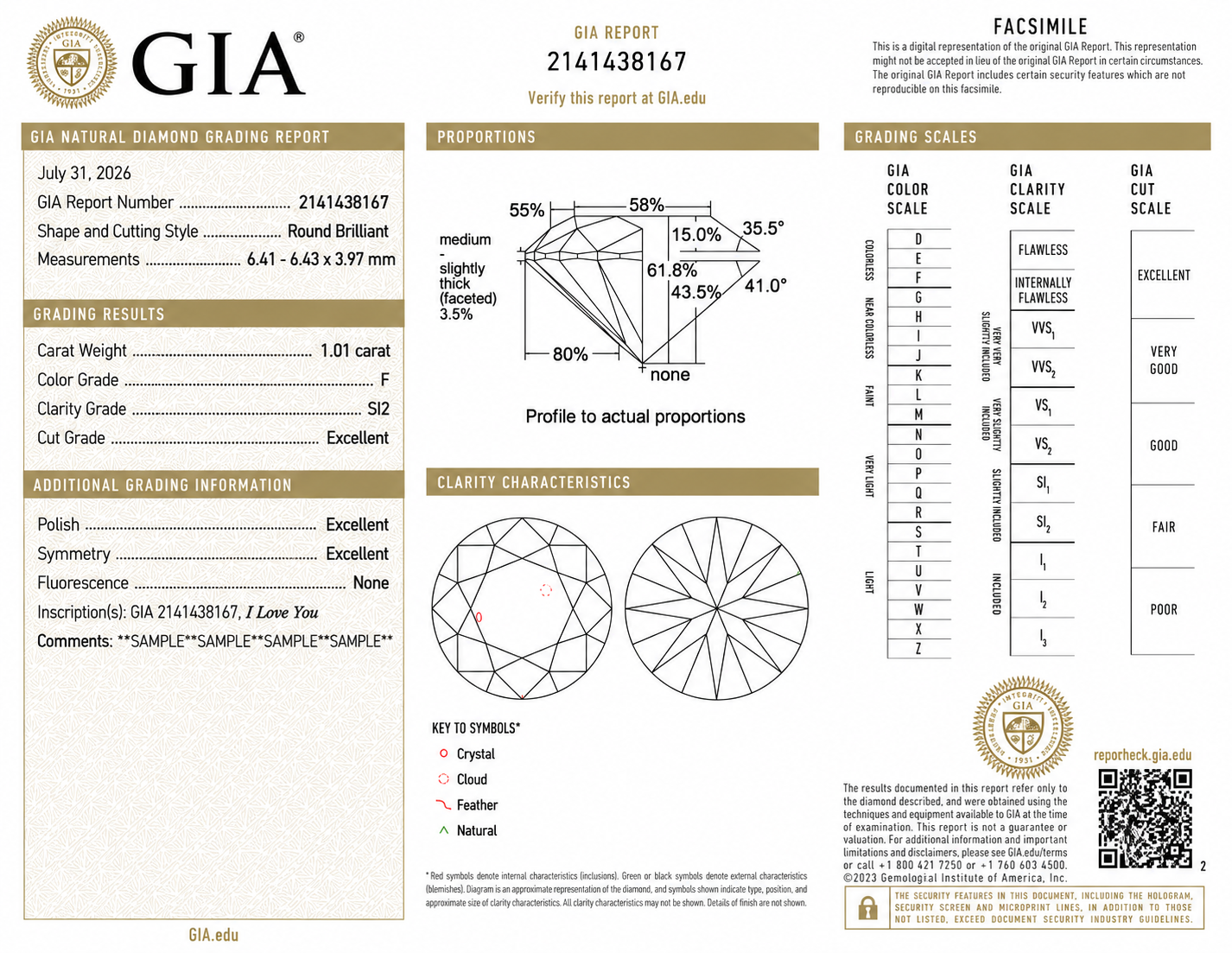
The example below is a GIA Natural Diamond Grading Report for a Round Brilliant diamond. Reading the report as a whole helps build a clearer picture of the diamond’s identity, quality characteristics, physical dimensions, proportions and clarity features.
WHAT TO LOOK FOR ON THE REPORT
REPORT DATE & NUMBER
The report date records when the diamond was graded, while the report number uniquely identifies the laboratory record.
July 31, 2026 · GIA Report No. 2141438167SHAPE & CUTTING STYLE
This identifies the diamond’s overall outline and the style in which its facets have been arranged.
Round BrilliantMEASUREMENTS
Measurements record the physical dimensions of the diamond in millimetres.
6.41 – 6.43 × 3.97 mmCARAT WEIGHT
Carat records the weight of the diamond rather than simply its visible diameter or overall dimensions.
1.01 caratCOLOUR GRADE
For diamonds assessed on the GIA D-to-Z scale, the colour grade indicates the degree of colour observed in the stone.
Colour Grade: FCLARITY GRADE
Clarity evaluates internal inclusions and external blemishes observed during laboratory grading.
Clarity Grade: SI2CUT GRADE
For a standard Round Brilliant diamond, the cut grade considers how proportions and craftsmanship contribute to its overall visual performance.
Cut Grade: ExcellentPOLISH & SYMMETRY
Polish evaluates the quality of the finished facet surfaces, while symmetry considers the precision and alignment of the diamond’s facet arrangement.
Polish: Excellent · Symmetry: ExcellentFLUORESCENCE
Fluorescence records the strength of the diamond’s reaction to long-wave ultraviolet light under laboratory conditions.
Fluorescence: NonePROPORTIONS
The proportions diagram records important relationships between the table, total depth, crown, pavilion, girdle and culet.
Table 58% · Depth 61.8% · Crown Angle 35.5° · Crown Height 15.0% · Pavilion Angle 41.0° · Pavilion Depth 43.5%STAR, LOWER HALF, GIRDLE & CULET
These additional proportion details further describe the diamond’s facet structure and profile.
Star Length 55% · Lower Half 80% · Girdle: Medium – Slightly Thick (Faceted), 3.5% · Culet: NoneLASER INSCRIPTION
Identifying information may be laser inscribed on the diamond’s girdle and recorded on the grading report.
GIA 2141438167 · I Love YouThe details above correspond to the example GIA Natural Diamond Grading Report shown on this page. Information appearing on a GIA report can vary according to the diamond, its shape and the type of report issued.
CHECK YOUR GIA REPORT
Have a GIA-graded diamond of your own? Enter the report number on GIA Report Check to view and verify the grading information recorded for your individual diamond.
CHECK YOUR GIA REPORT